Quick Answer
The Duolingo English Test “Is It a Real Word?” exercise measures
your ability to recognise genuine English words rather than define them.
To succeed, learn common word forms, recognise borrowed words from other
languages, read authentic English regularly, and practise distinguishing
real words from convincing fake ones.
Imagine opening your Duolingo English Test and seeing a screen filled
with random-looking letter combinations. Some of them look perfectly
normal. Others seem completely ridiculous. Your task is surprisingly
simple.
Is it a real English word or not?
It sounds easy until you actually try it.
Consider an example similar to what you might see on the exam.
Real or Not?
- bewilder
- splorning
- watched
- crepes
- glimber
- discombobulating
- refrung
Could you confidently identify every genuine English word?
Many test takers hesitate because English contains thousands of
unusual-looking words. Some come from French, Latin, Greek, Italian,
German, Japanese and many other languages. Others are different
grammatical forms of familiar words. Some simply look fake even though
they appear in every major English dictionary.
The good news is that this task is not about memorising endless
vocabulary lists. It is about recognising patterns and training your
brain to notice what real English words look like.
This guide will show you exactly how.
Why Does the DET Include This Exercise?
Unlike traditional vocabulary questions that ask for definitions, this
task measures something deeper.
It tests whether you have developed an intuitive feel for English after
reading and listening to the language extensively.
Strong readers gradually build a mental dictionary. They may not know
every word, but they can often recognise whether a word belongs to
English.
That is exactly the skill the Duolingo English Test wants to assess.
One of the biggest mistakes candidates make is rejecting perfectly real
words because they seem unfamiliar. The exam does not only use dictionary headwords. It can also include different grammatical forms.
For example, if you know the verb watch, all of these are genuine
English words.
- watch / watches / watched / watching
Similarly,
- refer / refers / referred / referring
Notice something interesting. Words like referred or referring may look strange because they
contain double consonants. However, they follow standard English
spelling rules. The same applies to many other verbs.
- admitted / occurring / forgotten / beginning / travelled / cancelled
Out of context, some of these words may look unusual, but they are
completely correct.
Whenever you see a word ending in -ed, -ing, -s, -es, or
-ies, do not dismiss it too quickly. Ask yourself whether it could
simply be another grammatical form of a familiar word.
Strategy 2. English Contains Plenty of Strange-Looking Words
Some authentic English words look so bizarre that many native speakers
smile when they hear them.
Here are some excellent examples.
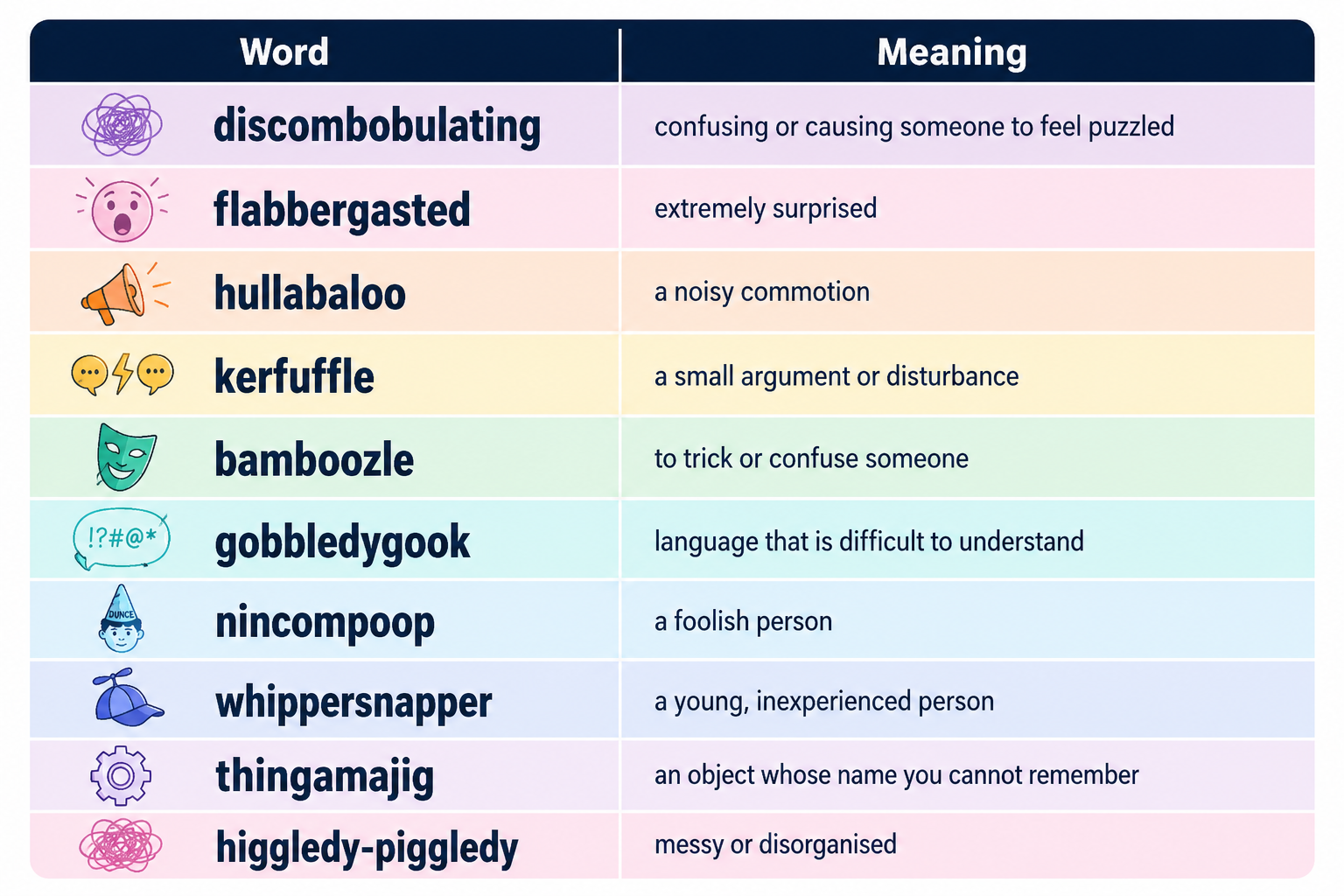
If you encountered some of these on the exam without context, you might
easily assume they were invented.
They are not.
Every one of them is a genuine English word.
Strategy 3. Many English Words Come from Other Languages
English is famous for borrowing vocabulary from around the world.
That is why some words seem unusual.
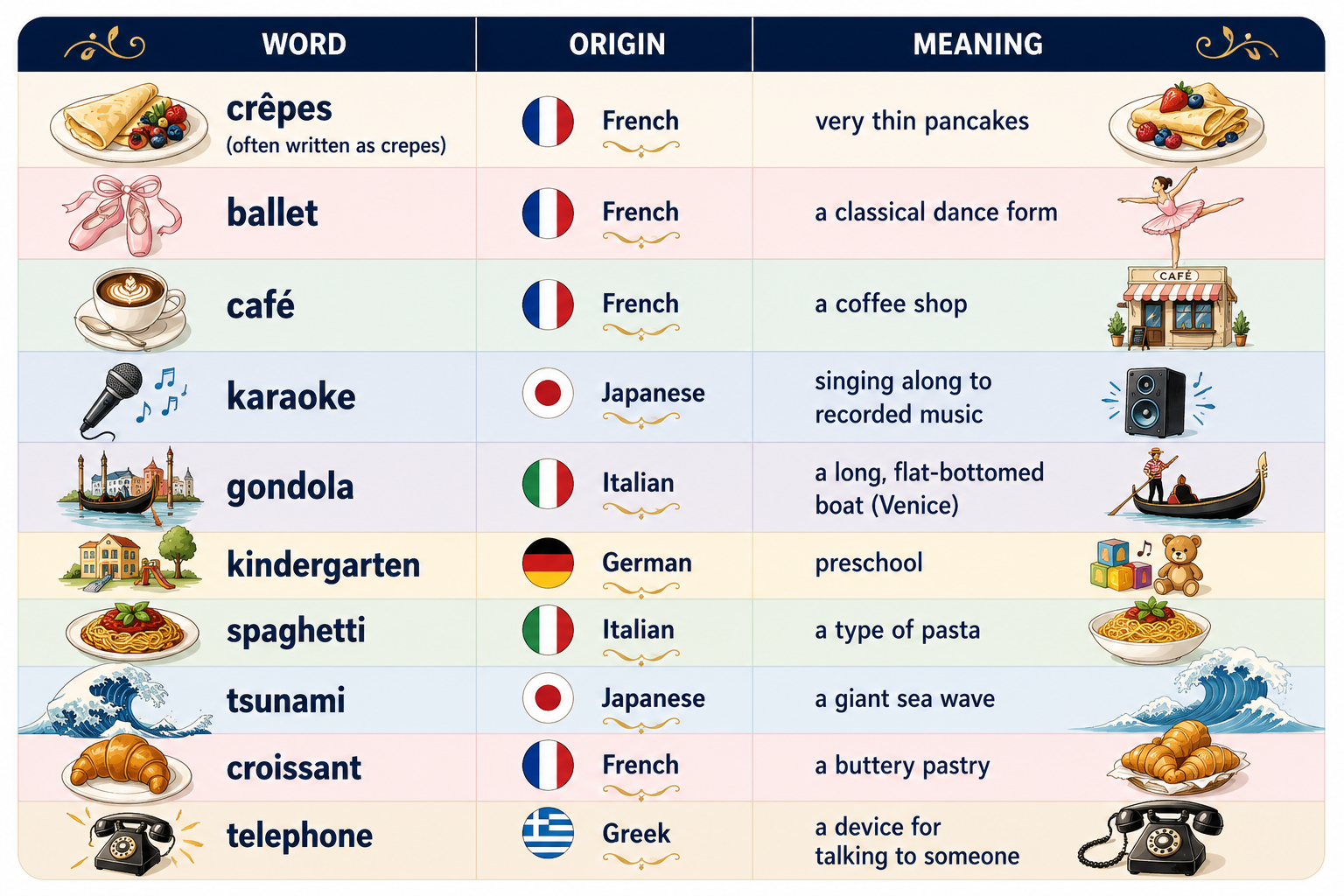
Because English has borrowed words for centuries, the spelling of some
words does not always follow typical English patterns.
That is perfectly normal.
Strategy 4. Watch Out for Fake Words That Look Convincing
The test writers are clever. Many fake words look almost real. Consider these examples.
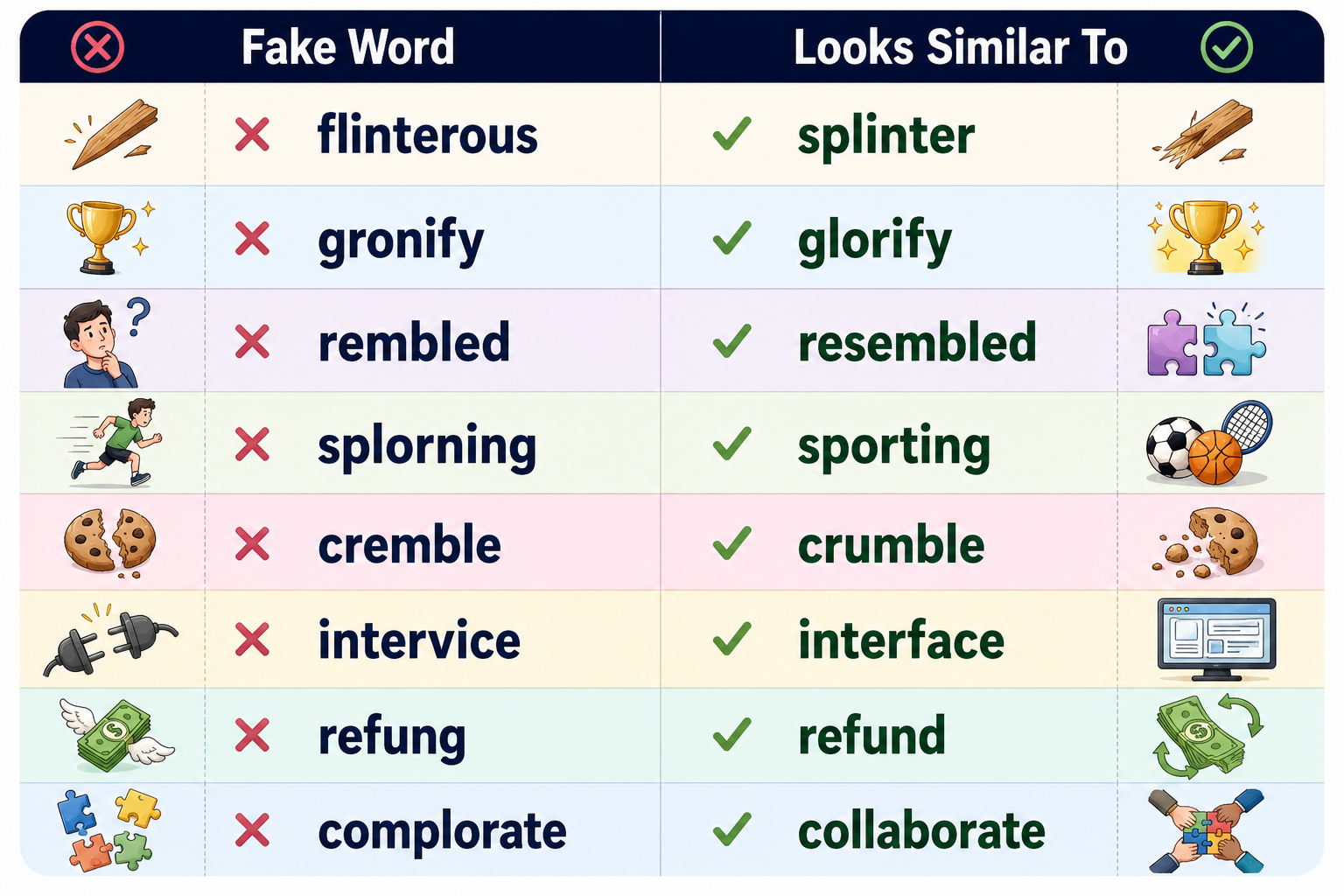
The fake words often imitate common prefixes, suffixes and spelling
patterns. Do not rely on guessing. Instead, ask yourself,
Have I actually seen this word while reading English?
If the answer is no, be cautious.
Strategy 5. Read Much More Than You Think You Need To
This exercise rewards exposure. Students who read regularly recognise thousands of words naturally.
Excellent sources include:
- BBC News
- National Geographic
- The Guardian
- The Economist
- novels
- blogs
- magazines
- academic articles
The more you read, the larger your mental dictionary becomes. Eventually, you begin recognising words instinctively.
Exam Practice
Decide whether each item is a real English word or not a real
English word.
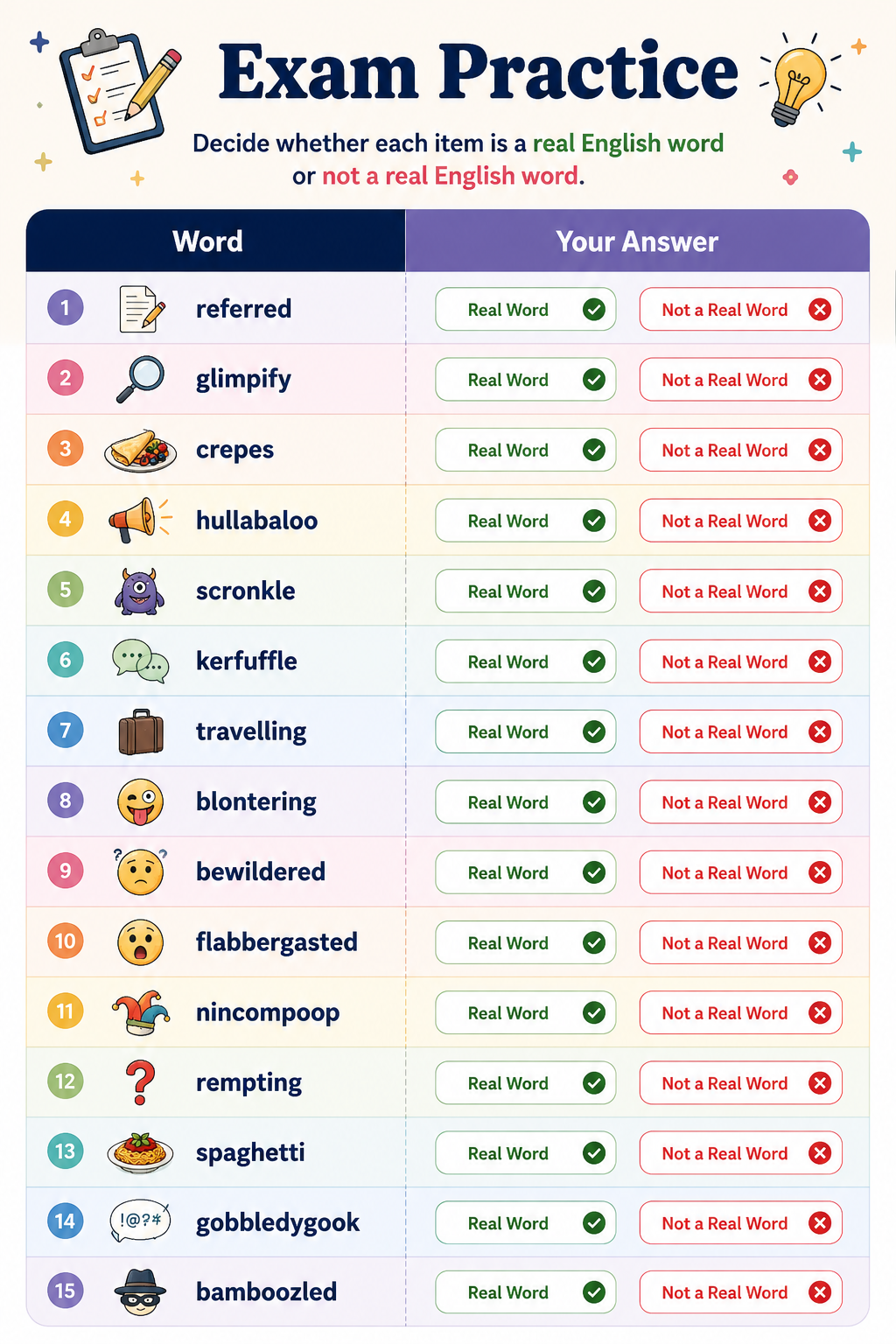
Answer Key
Word Answer
referred ✅ Real
glimpify ❌ Fake
crepes ✅ Real
hullabaloo ✅ Real
scronkle ❌ Fake
kerfuffle ✅ Real
travelling ✅ Real (British spelling)
blontering ❌ Fake
bewildered ✅ Real
flabbergasted ✅ Real
nincompoop ✅ Real
rempting ❌ Fake
spaghetti ✅ Real
gobbledygook ✅ Real
bamboozled ✅ Real
Expand Your Vocabulary With These Wonderful English Words
One of the best ways to prepare for this exercise is to learn unusual
vocabulary that appears in authentic English.
Here are some fascinating words worth knowing.
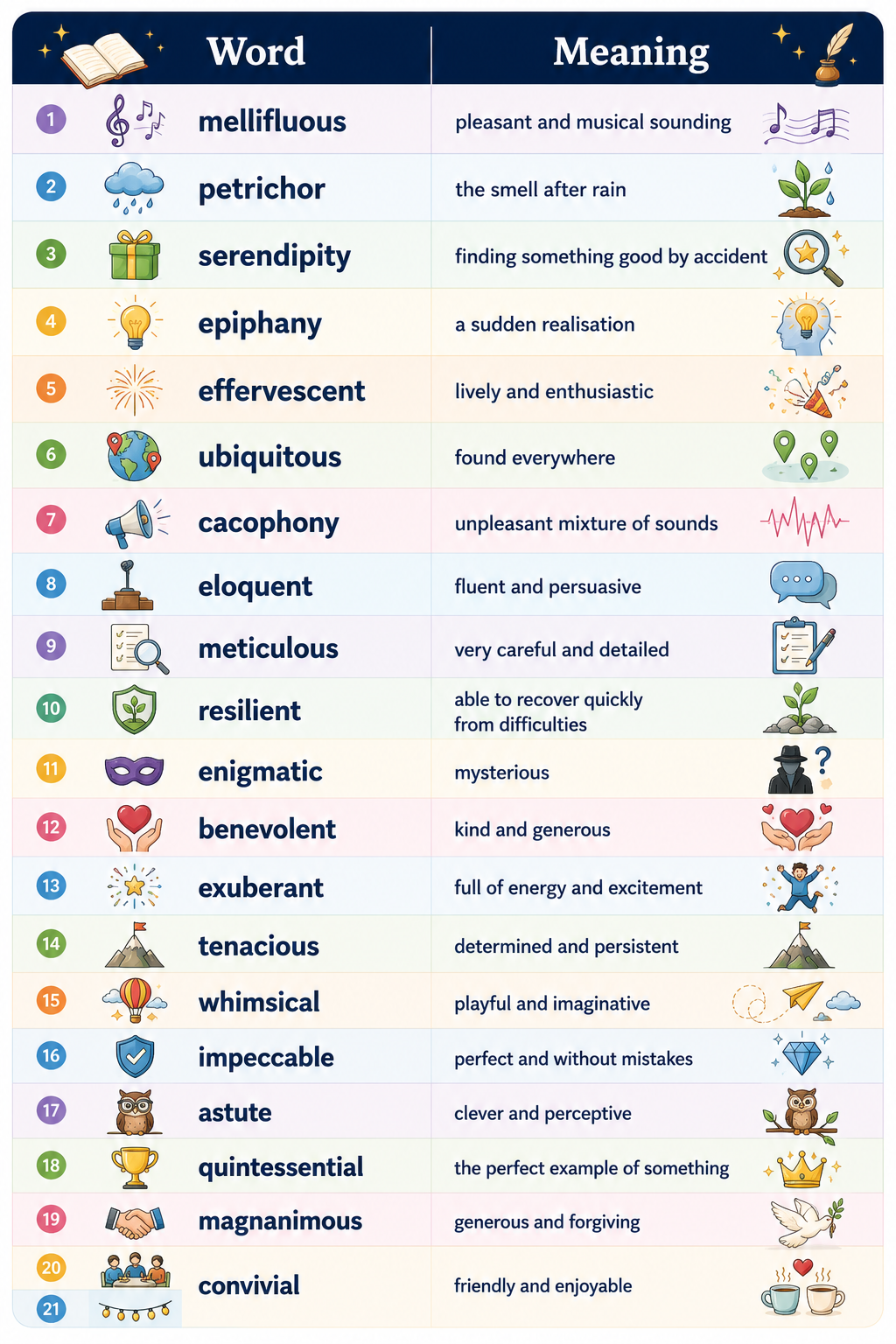
Learning these words will not only help with this exercise but will also
improve your speaking, writing, reading and listening scores.
Final Tips for Success
Whenever you practise this task, remember these golden rules.
- Do not panic when you see unfamiliar words.
- Look for familiar roots and endings.
- Remember that verbs often appear in different grammatical forms.
- Expect loanwords borrowed from many different languages.
- Read English every day to build your mental dictionary.
- Learn unusual vocabulary alongside common vocabulary.
- Trust your growing intuition instead of overthinking every answer.
The more authentic English you read, the easier this task becomes.
Eventually, recognising real English words feels almost automatic, and
what once looked like a random collection of letters begins to reveal
familiar patterns.
Want to Achieve a High Duolingo English Test Score?
Preparing for the DET is about much more than memorising vocabulary
lists. You need smart strategies, targeted practice and expert feedback
that focuses on the skills the test actually measures.
If you’re aiming for a top score, I can help. As an experienced English
teacher and Duolingo English Test coach, I provide personalised lessons,
realistic exam practice and proven techniques that help students build
confidence and maximise their scores.
Whether you’re applying to university or pursuing new career
opportunities, I’d be delighted to help you reach your target score.
Feel free to explore my other DET resources on this blog or get in touch
to discuss one-to-one coaching.
Frequently Asked Questions
What is the “Is It a Real Word?” exercise on the Duolingo English Test?
It asks you to identify genuine English words and distinguish them from
invented ones. The task measures vocabulary recognition rather than
definitions.
How can I improve at this exercise?
Read authentic English daily, learn advanced vocabulary, recognise
common prefixes and suffixes, and practise with real and fake word
lists.
Yes. Forms such as watched, referred, travelling, and cancelled
are all genuine English words and may appear.
Key Takeaways
- Learn common grammatical word forms.
- Expect borrowed words from many languages.
- Watch out for realistic-looking fake words.
- Read widely to build vocabulary naturally.
- Practise regularly with exam-style activities.