Most people use ChatGPT to write emails, brainstorm ideas, generate content or answer questions. While it’s excellent for all of those things, one of the most powerful applications I’ve discovered as an English communication coach is something very different:
teaching pronunciation and accent optimisation.
When I first started experimenting with ChatGPT in my coaching, I wasn’t looking for a replacement teacher. I was looking for a way to help my students practise more effectively between lessons.
What I discovered was a tool that could generate personalised pronunciation exercises, speaking challenges, presentation practice and communication drills in seconds.
Today, ChatGPT has become one of the most valuable tools I use with my students. Not because it replaces coaching. Because it enhances it.
Why Pronunciation Is Often the Missing Piece
Most of the professionals I work with already speak English well.
They can participate in meetings, write reports, negotiate with clients and deliver presentations.
Yet many tell me things like:
- “I know the words, but I don’t sound confident.”
- “People sometimes ask me to repeat myself.”
- “I want to sound more professional during presentations.”
- “I want my English to reflect my expertise.”
Interestingly, grammar is rarely the problem.
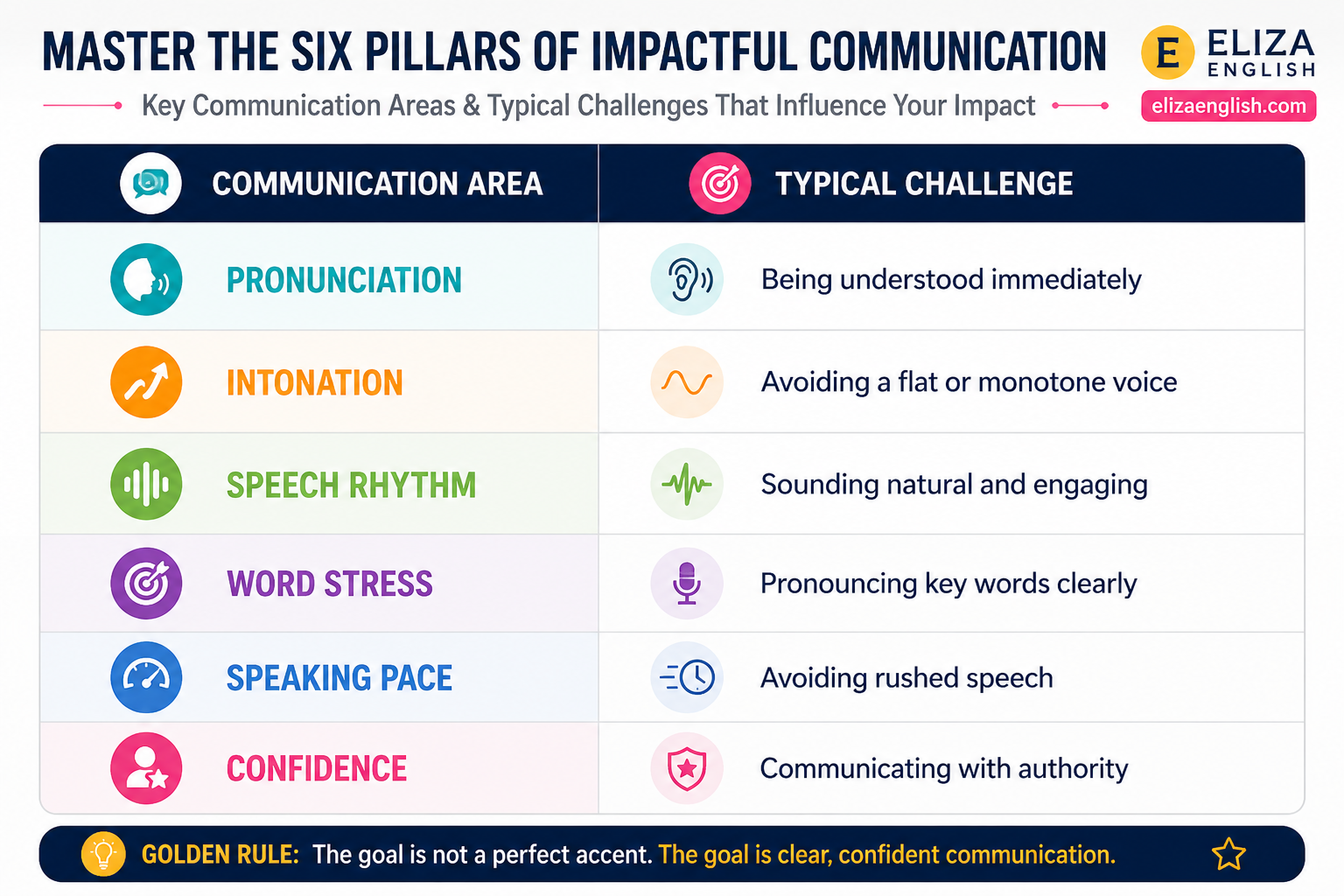
These are the areas that often determine whether someone sounds engaging, credible and easy to understand.
This is where ChatGPT can be incredibly useful.
What ChatGPT Helps Me Teach
I use ChatGPT to support students in five key areas:
1. Difficult English Sounds
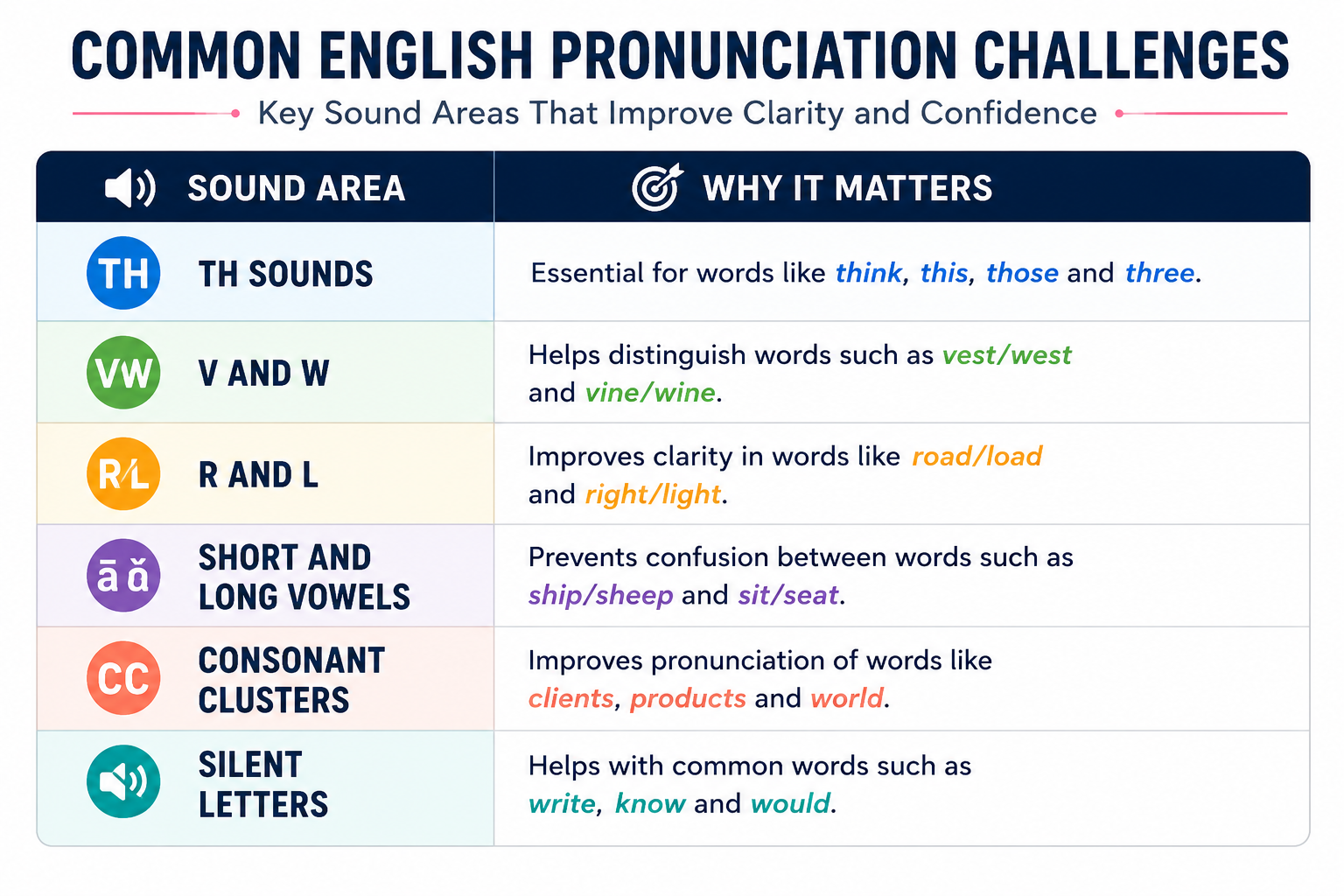
Rather than using generic exercises, I ask ChatGPT to create targeted practice based on the student’s specific challenges.
For example:
“Create 20 business-related sentences containing both voiced and voiceless TH sounds.”
Within seconds, I have customised practice material that is relevant to the student’s professional life.
The result is more focused practice and faster improvement.
2. Intonation: The Skill Most Learners Ignore
One of the biggest communication problems I encounter isn’t pronunciation. It’s intonation.
Many advanced speakers pronounce words correctly but speak with a flat voice. As a result, they may sound uncertain, uninterested or less confident than they actually are.
The same sentence can communicate completely different meanings depending on how the voice moves.
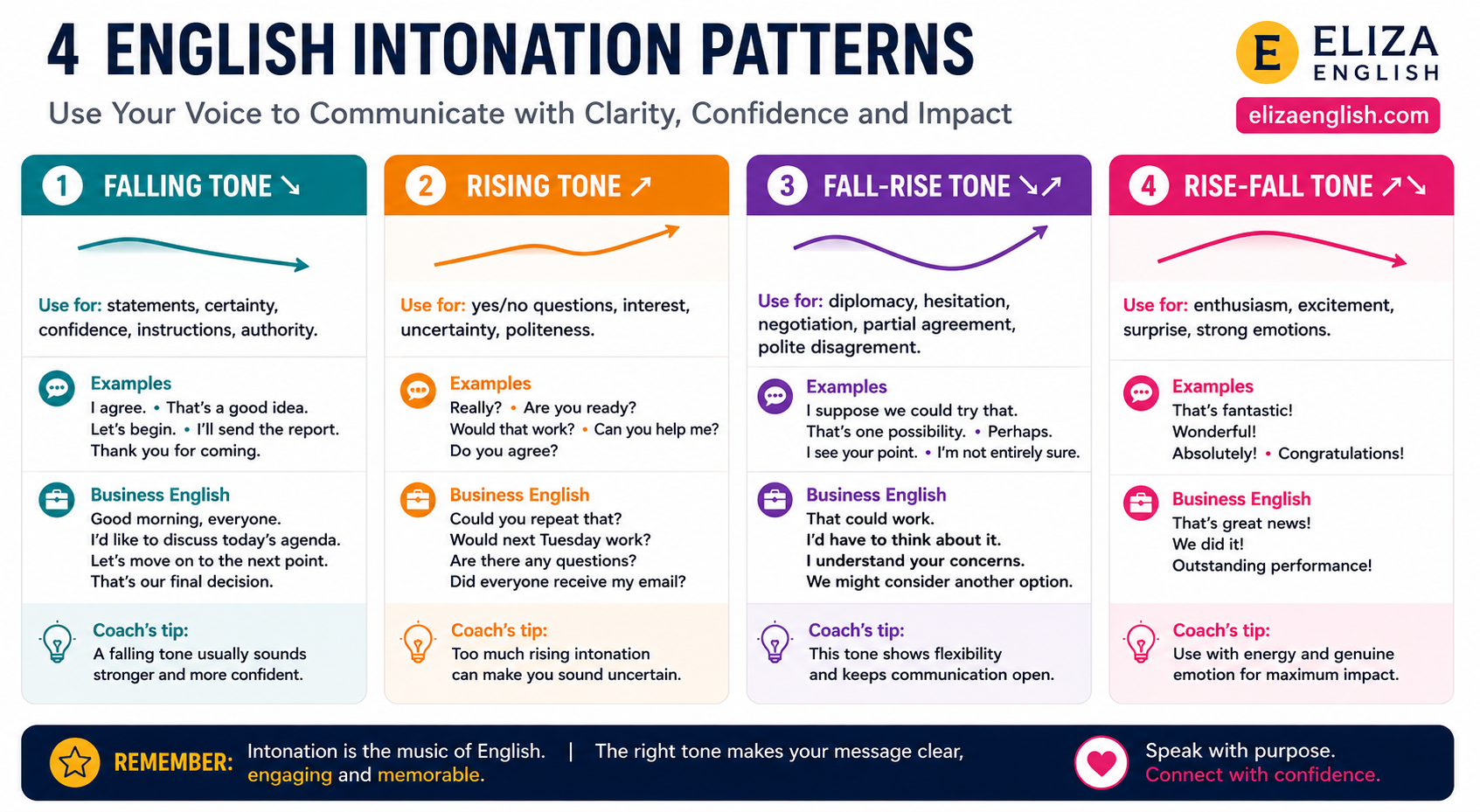
I regularly ask ChatGPT to generate intonation exercises that help students explore these differences.
This often creates some of the most dramatic communication improvements I see.
3. Word Stress and Natural Rhythm
English has a rhythm. Every word has a stress pattern, and placing stress incorrectly can make even familiar vocabulary difficult for listeners to recognise. I often work with highly educated professionals who avoid using advanced vocabulary simply because they are unsure how to pronounce it.
Common examples include:
- entrepreneur
- consciousness
- conscientious
- sustainability
- implementation
One of my favourite prompts is:
“Give me 20 advanced business words. Break them into syllables and mark the stressed syllable.”
Students quickly develop confidence with sophisticated vocabulary and begin using it naturally in conversations, meetings and presentations.
4. Presentation and Meeting Communication
Perhaps my favourite use of ChatGPT is presentation training. Many of my clients need English for:
- presentations / conferences
- client meetings / interviews
- networking events
Pronunciation alone isn’t enough for these situations. Students also need to learn how to:
- sound confident & engage an audience
- pause effectively & emphasise important information & organise ideas clearly
ChatGPT allows me to create realistic simulations instantly. For example:
- Act as a difficult client.
- Act as a conference audience.
- Act as an interviewer for a senior position.
- Act as a potential investor.
Students practise real communication rather than isolated language exercises. That’s where genuine progress happens.
5. Eliminating Speaking Habits That Reduce Impact
Many learners assume they need to fix individual sounds. Sometimes that’s true. But often the real problem is a speaking habit. Common examples include:
- speaking too quickly
- overusing filler words
- avoiding pauses
- sounding monotonous or overly formal
- translating directly from their first language
One client, a senior engineer, believed his pronunciation was holding him back professionally. After listening carefully, I realised that his biggest challenge wasn’t pronunciation at all. He never paused. His ideas were excellent, but listeners didn’t have time to process them. We used ChatGPT to generate short presentation scripts and practised strategic pausing between ideas. Within a few weeks, colleagues began commenting that he sounded more confident and professional. His pronunciation hadn’t changed dramatically. His delivery had. And that changed everything.
My Favourite ChatGPT Prompts for Pronunciation Practice
If you’d like to try this yourself, here are some prompts I regularly use with students.
For Difficult Sounds
“Act as my pronunciation coach. Create 20 business sentences containing TH, V/W and R/L sounds.”
For Intonation
“Give me ten business phrases and explain which intonation pattern I should use and why.”
For Word Stress
“Give me ten advanced business words. Break them into syllables and mark the stressed syllable.”
For Presentations
“Act as an executive communication coach. Create a one-minute presentation script and indicate where I should pause and which words deserve emphasis.”
For Natural Speech
“Identify filler words in my speech and suggest more natural alternatives using pauses, stress and intonation.”
What ChatGPT Cannot Do
As powerful as ChatGPT is, it does have limitations. It can create exercises. It can generate role plays. It can provide endless practice opportunities. But it cannot fully replace personalised coaching.
An experienced coach can identify recurring pronunciation patterns, communication habits and confidence barriers that learners often fail to notice themselves.
I often tell my students:
ChatGPT provides the gym. A coach provides the personal trainer.
Both are valuable. Together, they are incredibly powerful.
Why I Believe AI Is Changing Pronunciation Training Forever
We are living through one of the most exciting periods in language learning history. For the first time, learners have access to an intelligent assistant capable of generating unlimited speaking practice whenever they need it. Used strategically, ChatGPT can dramatically accelerate progress. But the goal isn’t perfect pronunciation. It has never been perfect pronunciation.
The goal is to:
- communicate clearly
- sound confident
- express ideas naturally
- lead meetings effectively
- deliver presentations with impact
- build credibility through communication
That is exactly what I focus on in my Accent Optimisation and High-Impact Communication coaching. Because people rarely remember perfect grammar. They rarely remember perfect pronunciation. They remember confident, engaging communicators. And when used correctly, ChatGPT can become one of the most powerful tools available to help you become one of them.
Ready to Optimise Your Accent?
ChatGPT is an incredible practice tool, but progress is fastest when smart AI practice is combined with expert feedback and a structured roadmap.
In my Accent Optimisation & High-Impact Communication Coaching, I help professionals:
- improve pronunciation clarity
- master intonation and speech rhythm
- sound more natural in meetings
- deliver presentations with confidence
- strengthen executive presence
- develop a clear, authentic international English voice
Your accent is not the problem. The goal is to make your communication transparent, crystal-clear and impactful.